

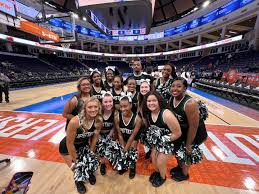
Cheerleading tryouts don’t work the same way everywhere. Some college programs hold an open tryout that anyone admitted to the school can attend. Others start with a video round and invite only some candidates to campus. A few don’t hold a tryout at all and recruit athletes over several years. This guide explains how the process works from start to finish, using the published tryout pages and packets of real college programs as examples, and the safety rules that govern school and all star cheer.
This is the overview. For performance advice, see how to stand out at cheer tryouts. For the errors that cost candidates a spot, see cheer tryout mistakes to avoid.
Step 1: Know Which Rules Apply to Your Team
Every kind of cheer team follows a published safety rulebook, and that rulebook shapes what you can be asked to do at a tryout:
- High school (and younger school teams): high school cheer follows one rulebook, the NFHS/USA Cheer Spirit Rules Book. USA Cheer recommends that elementary, junior high and middle school teams follow the same rules, with extra restrictions on some tosses.
- College: USA Cheer publishes the College Cheerleading Rules. According to USA Cheer, the NCAA, the NAIA and many junior college associations require whoever supervises a college cheer program to complete the USA Cheer Safety & Risk Management course.
- All star (club): all star rules, levels and age divisions come from the U.S. All Star Federation (USASF). The 2026-27 USASF cheer rules took effect June 1, 2026.
Your own school, gym or college still sets its tryout requirements. The rulebooks set the safety floor.
Step 2: Find Out Which Tryout Format the Program Uses
College programs publish their process on the athletics or spirit program website. Among the programs covered on this site, three formats show up again and again:
- Open in-person tryout. UCLA says you don’t need an invitation to audition, and it runs optional prep clinics beforehand. Troy’s 2025-26 tryout asked candidates to pre-register online, then held a two-day in-person tryout.
- Video round, then invitation. South Carolina, San Diego State, Arizona, Florida, Texas Tech and Missouri all used a video or highlight-reel first round in their most recent cycles, then invited selected candidates to in-person rounds on campus.
- Recruitment instead of a tryout. Ohio State says it does “not hold a traditional tryout.” Athletes submit a recruiting form and skills video, attend clinics, and receive offers on a rolling basis. Washington State describes a similar recruitment model.
Video options also vary. Virginia Tech accepts a video from anyone who can’t attend in person. Kansas State accepts one only when a competition or other event conflicts, with proof of the date. Fresno State allows video but says there is “a definite advantage to trying out in person.” UCF holds all tryouts in person on campus.
Step 3: Put the Deadlines on Your Calendar
College tryout cycles usually run in the spring before the season. Here is what some programs published for their most recent cycles:
| Program | Application / video due | In-person rounds |
|---|---|---|
| Western Kentucky (2026-27) | February 1, 2026 | Invitation only, after video review |
| Kansas State (2026) | Application March 26, 2026 | March 28-29, 2026 |
| South Carolina (2026-27) | April 1, 2026 | April 17-18, 2026 (invited) |
| San Diego State (2026-27) | April 1, 2026 | May 7-9, 2026 (invited) |
| Arizona (2026) | April 17, 2026 | May 9-10, 2026 (invited) |
| Virginia Tech (2026-27) | Video tryouts April 23, 2026 | April 24-26, 2026 |
| Florida (2026-27) | Highlight reels April 30, 2026 | May 1-2, 2026 (invited) |
| UCLA (2026-27) | n/a | May 17, 2026 |
| Texas Tech (2027-28) | April 20, 2027 | May 14-16, 2027 (invited) |
These dates are examples of how the calendar works, not the next cycle’s dates. Programs post new dates at different times. Louisville, for example, says registration for its 2027-28 team opens in March 2027. Recruitment programs run earlier: Ohio State’s deadline for the class of 2027 is November 1, 2026. Always check the program’s own page.
Step 4: Meet the Eligibility Rules and Gather Paperwork
Paperwork is where many candidates get caught out. Requirements differ by school, but these items come up repeatedly:
- Admission to the university. Arizona, South Carolina, Florida, Texas Tech and Utah all require incoming students to be accepted (or show acceptance) to try out or make the team. Louisville asks you to apply to the university before you can get a tryout application.
- Grades and enrollment. Current UCLA students need a cumulative GPA of 2.5 or above. Current Texas Tech students need at least a 2.0 cumulative and current GPA and full-time enrollment. Arizona asks for a transcript showing at least a 2.0 cumulative and semester GPA.
- Medical forms. Pitt asks for a physical from within six months of the tryout and sickle cell solubility test results. UCF requires a sickle cell test and a 2026 sports physical on the first day of clinic. UCLA, by contrast, doesn’t need a physical until after you make the squad.
- Insurance. Most programs ask for proof of health insurance, often a copy of the front and back of your card.
- Fees. In their most recent cycles, Kansas State charged $25, Florida $35 (non-refundable), Texas Tech $45 (for 2027-28), and Arizona and Fresno State $50 each.
- References. Arizona sends evaluation forms to two professional references and scores them as part of the tryout. Kansas State asks for a letter of recommendation from a coach. Pitt asks for one letter of recommendation.
Step 5: Learn the Material Before You Arrive
Many programs publish their tryout material ahead of time and expect you to know it. Kansas State puts its fight song, “Wabash Cannonball” and chant online and says it will not teach them at tryouts. South Carolina expects female applicants to know the fight song. UCLA posts squad choreography on its YouTube channel. Material can change between cycles, too. San Diego State noted that its female fight song got new motion work on April 21, 2026.
Step 6: Know What Happens on Tryout Day
Tryout days combine several evaluations. Here is what published schedules include:
- Tumbling: standing and running skills. Virginia Tech scores five consecutive standing tucks, a back handspring tuck and a running pass.
- Stunting: usually judged by position (flyer, base, back spot). Virginia Tech has everyone stunt with three different partners, and Arizona assigns random partners at semifinals.
- Jumps: Kansas State asks for a toe touch, a connected triple jump and a jump to tumbling.
- Game-day material: fight song, chants and sideline routines. UCLA may run game-day scenarios such as time-outs and quarter changes.
- Fitness testing: Virginia Tech, Arizona and Fresno State list a fitness test, and Troy’s 2025-26 tryout opened with a “Benchmark conditioning test.” See our cheer tryout fitness test guide.
- Interview: UCLA candidates give a personal statement of up to 45 seconds and take part in a group interview. Arizona holds small-group interviews in professional attire at finals. Fresno State asks for business casual on interview day.
- Cuts between rounds: Virginia Tech posts a first-round cut list on the evening of day one. Arizona makes cuts after semifinals.
Step 7: Results and What Comes After
Results timing varies. Arizona announces the team right after its final round. Kansas State emails official offers two days after its final session. Virginia Tech posts its final list on the door and holds a team meeting and gear sizing straight away.
Making the team is also a commitment. Virginia Tech’s 2026-27 team had summer practice weekends in June and July and a preseason report date in August. UCLA requires its squad at Skills Training Camp in August. At UCLA and Arizona, returning members must try out again every year.
Safety: What the Rules Say About Tryouts and Practice
USA Cheer’s college rules say skills that have not been mastered should be performed only in a supervised practice environment, and that technical skills should not be performed on concrete, asphalt, wet or uneven surfaces. Kansas State says it follows all USA Cheer safety rules and will ask anyone caught breaking them to leave tryouts. It also doesn’t allow spotters for tumbling at tryouts, so tumble only what you can land safely on your own.
If you have had a head injury, don’t try out until a health-care professional clears you. USA Cheer collects concussion education and return-to-participation guidance on its concussion resources page.
Tryout Preparation Checklist
- Read the program’s current tryout page and packet from top to bottom.
- Note the format: open tryout, video round or recruitment.
- Put every deadline on your calendar, including fees and forms.
- Apply to the university early if admission is required.
- Book a physical and any required tests well ahead of time.
- Learn the posted fight song, chant and sideline material.
- Train standing and running tumbling on a hard or dead surface.
- Practice stunting with more than one partner or group.
- Build conditioning for a fitness test and a long tryout day.
- Prepare a short personal statement and interview answers.
- Lay out the exact attire the packet asks for.
Find Your School’s Tryout Guide
Every program’s details are different. Start with our College Cheerleading Tryout Guides Directory, or open a school guide directly, such as UCLA, Arizona, Virginia Tech, Kansas State, South Carolina or Ohio State. If you’re filming a video round, read how to film a cheer tryout video.
Frequently Asked Questions
Do all college cheer programs hold tryouts?
No. Many hold an open or invitation-only tryout, but some, such as Ohio State and Washington State, recruit athletes through forms, videos, clinics and direct contact instead.
When are college cheer tryouts?
Most of the programs above held tryouts between late March and mid-May, with video deadlines from February to April. Recruitment programs can have fall deadlines. Check each program’s page for the next cycle.
Do I need a physical to try out?
It depends on the school. Pitt and UCF require one before the tryout. UCLA only requires one if you make the squad.
Can I try out by video?
Sometimes. Virginia Tech and UCLA accept video from candidates who can’t attend. Kansas State accepts it only for a documented conflict. UCF doesn’t accept video at all.
Sources: USA Cheer, Cheerleading Rules, College Cheer and 2026-27 College Cheer Rules; USASF, Rules & Age Grid; program tryout pages and packets for UCLA, Troy, South Carolina, San Diego State, Arizona, Florida, Texas Tech, Kansas State, Virginia Tech, Western Kentucky, Ohio State, Pitt, UCF, Louisville, Utah and Fresno State. Last checked September 30, 2026.


2 thoughts on “Cheerleading Tryouts Guide: How the Tryout Process Works”